

Local AI involves a model, a runtime, and an interface. Running the stack yourself gives you deployment control, while performance still depends on memory, model size, and the work you ask it to complete.
Choose a runtime for your hardware
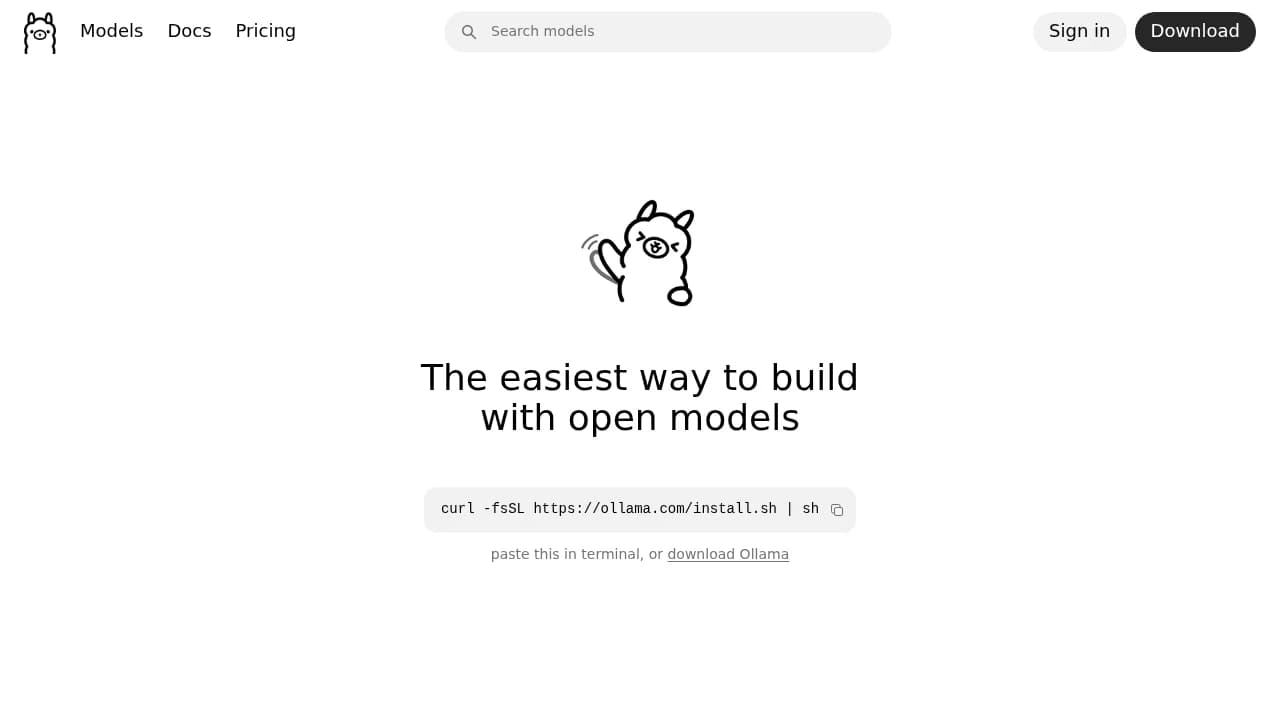
Ollama provides a straightforward way to manage and run models. llama.cpp emphasizes portable inference, while vLLM focuses on model serving. Check supported model formats and hardware requirements. Begin with a small model and measure response time before downloading larger variants.
Add the interface after inference works
Confirm a simple model request works before introducing a browser UI such as Open WebUI. Review connection settings and access controls. Compare the same prompts and context lengths across setups; record response time and useful output quality, not only tokens per second.
Separate the runtime from the chat interface
Ollama is a runtime and model-management option; Open WebUI provides a browser workspace that can connect to model services. These are separate parts of a stack. You can change the interface without necessarily replacing the runtime, which is useful when different people need different ways to interact with the same models.
Start by sending a simple request directly to the runtime. Once it works, add the interface and confirm which endpoint it uses. A local-looking interface can still send requests to a cloud provider if configured that way. Check the connection and model settings instead of assuming that every conversation stays on your machine.
Measure performance with your own inputs
Memory requirements vary with model size, quantization, context length, and concurrent requests. Avoid a universal claim that one amount of RAM is enough for every model. Check the model's documentation and start with a smaller download. Keep space available for several files if you plan to compare variants.
Use three tasks you actually perform: a short explanation, a longer document summary, and a structured output request. Record time to first response, total completion time, and whether the result is useful. Repeat with the same input and settings. A model that wins a public benchmark may still be awkward for your language, document format, or hardware.
Decide what should be local
Local inference can be convenient for experimentation and for workloads where you want deployment control. A cloud service may be more practical for occasional heavy tasks or when you need capabilities that your hardware cannot run comfortably. A mixed setup is reasonable when you understand where each request goes.
If you share a local service with a team, plan access controls, updates, storage, and backups as you would for another internal application. Test behavior when the runtime is unavailable. Keep model licenses separate from application licenses in your notes; permission to use a runtime does not automatically settle the terms for every model you download.
Before you make the switch
Run a small pilot with your own inputs. Compare the result, setup time, operating effort, and export options. Check current documentation and repository licenses before adopting a project; features and hosted plans can change. Keep the original files and configuration available until your new workflow has been tested.
Official instructions and sources
Official project documentationOriginal AltStack guide by Sushil Kumar Sah. Installation steps follow provider documentation; they do not imply testing on every supported device.