

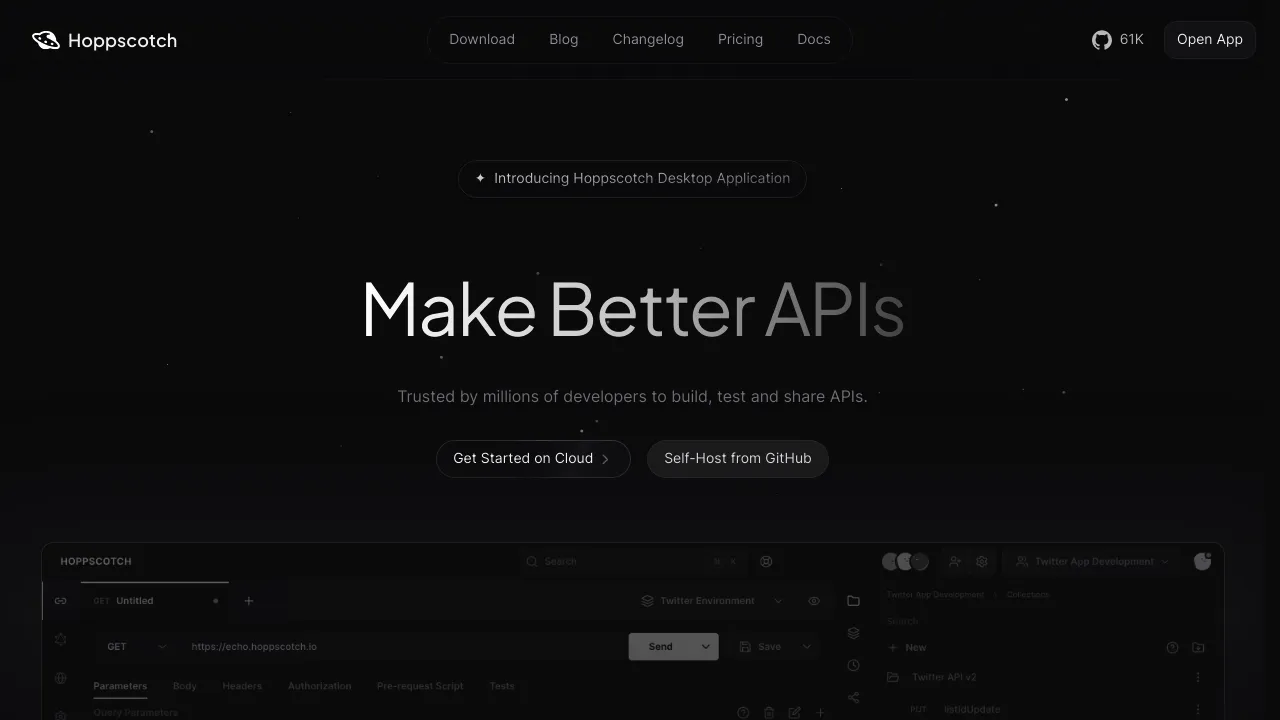
An API client is valuable when it makes everyday requests reproducible. Consider where collections live, how environments are shared, and whether a new teammate can run a request without extensive setup.
Test representative requests
Try authentication, uploads, large responses, and the protocols your APIs use. Bruno emphasizes collections stored with project files. Hoppscotch offers an accessible API development interface. Compare current feature sets and the license of the edition you plan to use.
Make the workflow portable
Store example environments without credentials. Document a smoke-test collection and check automation support. Export collections periodically. A portable request workflow makes onboarding easier and reduces the effort required to switch clients later.
Choose a workflow, then an API client
Bruno is a useful candidate when you want request collections to live with your project files. Hoppscotch is worth exploring when a browser-oriented client fits the team's workflow. Before comparing interfaces, decide whether requests are personal scratch work, shared documentation, or executable regression checks. That choice affects storage and collaboration needs.
Make a shortlist around the protocols and authentication methods you use. Include an ordinary request, a file upload, a paginated endpoint, and an authenticated call. If your API uses a streaming or specialized protocol, include it in the pilot rather than assuming every general API client supports it equally.
Make collections reproducible
Keep a sample environment with harmless values and explain which variables a developer must provide. Store secrets in the mechanism appropriate to your team instead of committing them beside the collection. A shared collection should be useful to a new contributor without exposing a production token.
Review how the tool saves request ordering, examples, and test assertions. If files are versioned, inspect a diff after a small edit. A format that produces readable changes makes code review easier. Import an existing collection and verify the behavior of several requests; a successful import message does not guarantee identical scripting or authentication behavior.
Test collaboration and automation separately
A client can be pleasant for exploratory work while being awkward in CI. Check whether the workflow offers a command-line runner, how failures are reported, and whether results can be archived. Run a small suite against a test endpoint and deliberately introduce a failing assertion to confirm the build reports it correctly.
For team use, decide how changes are reviewed and how environments are shared. Preserve the original collection until the new workflow has been used by more than one person. Choose the tool that supports your actual development process with the fewest special steps, even if another interface looks more familiar.
Before you make the switch
Run a small pilot with your own inputs. Compare the result, setup time, operating effort, and export options. Check current documentation and repository licenses before adopting a project; features and hosted plans can change. Keep the original files and configuration available until your new workflow has been tested.
Official instructions and sources
Official project documentationOriginal AltStack guide by Sushil Kumar Sah. Installation steps follow provider documentation; they do not imply testing on every supported device.